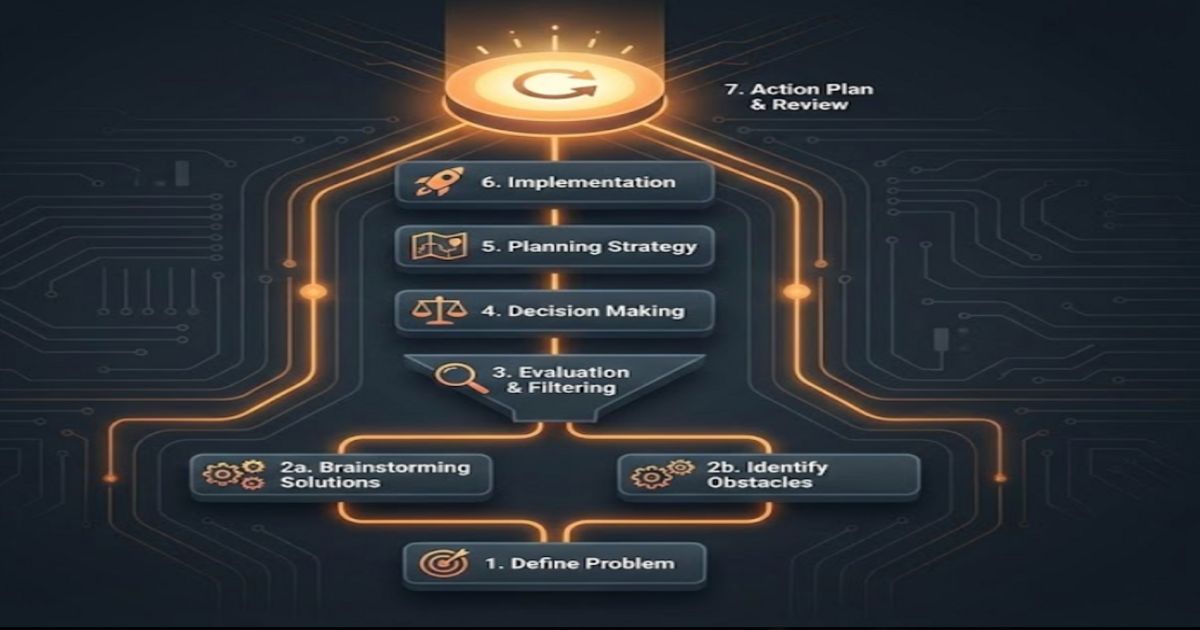
Rethinking Addiction Treatment: A Mechanistically-Informed Approach

Rethinking Addiction Treatment: A Mechanistically-Informed Approach
The traditional 12-Step model, while widely adopted, has limitations in its approach to addiction recovery. A more effective strategy may lie in a mechanistically-informed approach.
Deep Dive
The core mechanism of addiction involves complex neural pathways that drive maladaptive behaviors. 📌 Neural Rewiring: By leveraging evidence-based Cognitive Behavioral Therapy (CBT) techniques, individuals can challenge and modify these pathways, leading to sustainable behavioral change.
This process can be likened to $$y = f(x)$$, where $$y$$ represents the output behavior, $$x$$ is the input cognitive pattern, and $$f$$ is the neural function being reconditioned through CBT. By altering $$f$$, individuals can achieve a more adaptive $$y$$.
📌 Cognitive Friction: CBT reduces the friction between maladaptive cognitive patterns and addictive behaviors, facilitating a smoother transition to recovery. This is achieved by identifying and challenging distorted or unhelpful thinking.
The mechanistically-informed approach addresses the limitations of the 12-Step model by providing a more comprehensive and scientifically-grounded treatment strategy. This leads to improved homeostasis in individuals struggling with addiction.
By integrating domain-specific terms like "neural pathways" and "cognitive friction," we can better understand the complex mechanisms driving addiction. 📌 Recovery Dynamics: A mechanistically-informed approach enables a more nuanced understanding of the recovery process.
https://neuroviaxacademy.com/cbt-vs-12-step/